
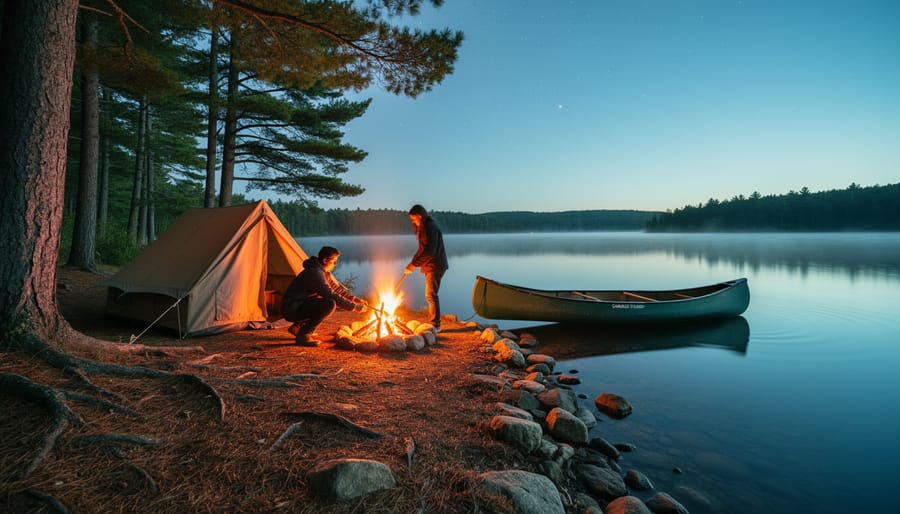
Camping in Ontario Canada comes down to three choices: where you want to sleep, how much comfort you want, and how early you plan. Pick a spot in one of the province’s 330-plus provincial parks or a private campground, decide between car camping, backcountry canoe routes, or a roofed option like a yurt or cabin, and book before the season fills up. Do those three things and the rest falls into place.
The variety is what surprises people. You can pitch a tent on a Georgian Bay granite shoreline in the morning, paddle a quiet Algonquin lake by afternoon, and watch the stars from a northern site with almost no light pollution. Prefer hot showers and a picnic table? Plenty of campgrounds have them. Want to carry everything on your back and see nobody for days? That’s here too.
Planning matters more than gear. Popular sites tend to go quickly once reservations open, weather can swing from sunny to soggy within a day, and bugs have opinions in early summer. A little prep goes a long way.
Camping here is also a chance to meet your neighbours, not just the landscape. Many parks and local groups welcome volunteers for trail cleanups, and community events like campfire programs and park festivals make a weekend away feel connected to the people who care for these places. Let’s walk through the styles, regions, and practical steps so you can find your spot.
Why Camping in Ontario Feels Different
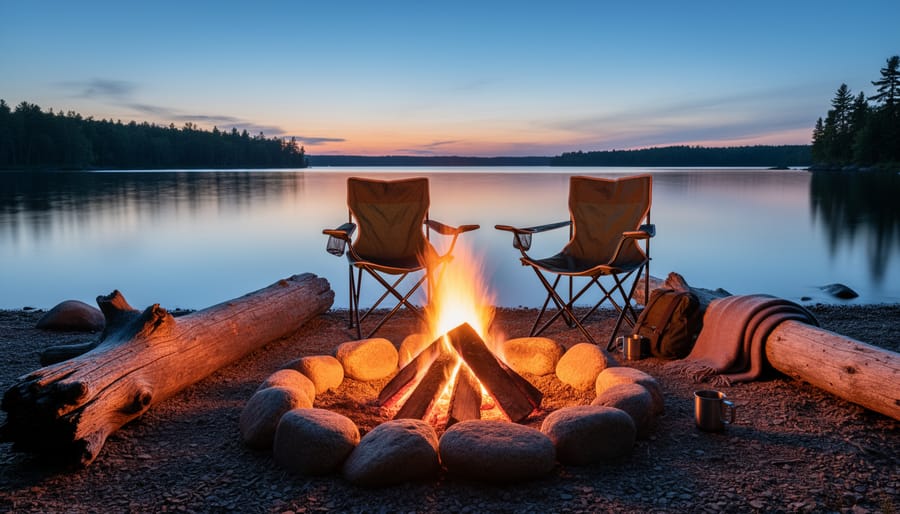
A Province Built for the Outdoors
Ontario is big. It stretches from the Great Lakes shorelines in the south to the Hudson Bay lowlands in the far north, and you can drive for a full day and still be in the same province. That scale shapes every camping trip, because the landscape changes so much from one region to the next.
There are hundreds of provincial parks, from busy beachside campgrounds to quiet interior sites you can only reach by canoe. Beyond the park gates, Crown land opens up even more room for self-reliant campers. Add in private campgrounds, conservation areas, and cozy cabins, and you start to see the pattern. Whether you want hot showers and a picnic table or nothing but granite, pine, and a paddle, Ontario has a spot that fits.
Camping as a Way of Life in Ontario
For many Ontario families, summer has a rhythm, and camping sets the beat. There’s the long weekend in May when everyone digs the tent out of the garage and argues over who packed the poles. There’s the same favourite site, booked year after year, where kids have grown from marshmallow-fumblers to the ones who can finally light the fire themselves. Grandparents tell the same canoe-tipping story every time, and somehow it gets better with age.
Camping shapes small-town Ontario too. Long weekends fill nearby general stores, ice cream stands, and community halls with weary, happy travellers.
It’s also worth remembering that people have been camping here, in the truest sense of living with the land, for thousands of years. Indigenous peoples, including the Anishinaabe, Haudenosaunee, and Cree, have cared for these lands and waters since long before the first provincial park. Camping here is a chance to tread lightly and with gratitude.
Choosing Your Style of Camping
Drive-In Campgrounds for Easy Family Weekends
Drive-in campgrounds are where most Ontario families get their start, and it’s easy to see why. You pull up, unload the car, and your site is ready for the weekend. Provincial parks and private campgrounds alike often offer flush toilets, showers, and a sandy beach just a short walk from your tent.
Many parks also run interpretive programs, so kids can join a guided nature hike, a campfire talk about local wildlife, or a junior ranger activity without leaving the grounds. Those little moments tend to become the stories families retell for years.
Because the gear stays close to the car, you can bring the comfy chairs, a full cooler, and an extra pillow. If you’re new to camping in Ontario, Canada, a drive-in site is a gentle, forgiving place to learn the ropes.
Interior and Backcountry Camping for the Adventurous
If you’re craving quiet, interior camping might be your calling. Here, you leave the car behind and reach your site by canoe or on foot. Think of paddling across a still lake at dawn, carrying your boat over a portage trail, and setting up camp where the only neighbours are loons and the odd curious chipmunk.
Algonquin and Killarney are famous for their interior canoe routes, but many provincial parks offer hike-in sites too. The reward is solitude, brilliant night skies, and a real sense of having earned your view.
A little preparation goes a long way. Practise your paddling and packing before a big trip, learn to read a map, and pack light enough to carry everything in one go. Tell someone your route and return date, and check with the park about permits and conditions before you set out.
Crown Land and Cozier Alternatives
Not every camper wants a numbered site and a picnic table. Some prefer the freedom of Crown land, which is public land where self-reliant campers can often set up away from the crowds. It rewards good planning, though. Rules about who can camp, where, and for how long vary, so check the current guidelines from the province before you go, and be ready to pack out everything you bring in.
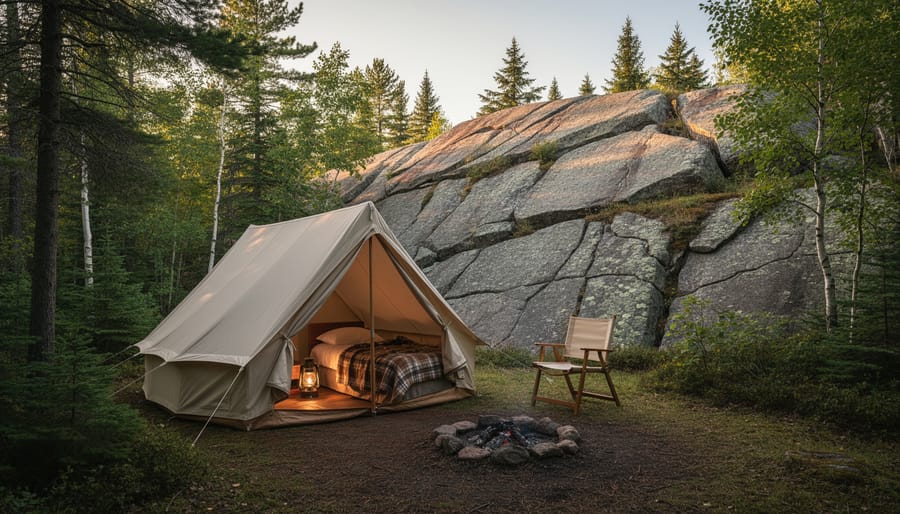
If rustic isn’t your style, Ontario has plenty of softer landings. Many provincial parks and private campgrounds offer yurts, rustic cabins, and cottage-style units with real beds and a roof overhead. Glamping outfitters take it a step further with canvas tents, cozy linens, and sometimes a wood stove. These options are a lovely way to bring along hesitant friends or grandparents and still wake up to birdsong and lake mist.
Exploring Ontario’s Camping Regions
Southern Ontario: Lakeshores, Escarpment, and Easy Escapes
Southern Ontario is where a lot of us catch our first whiff of woodsmoke each season. The Great Lakes shoreline offers sandy beaches and sunset views, while the Niagara Escarpment adds rocky lookouts, waterfalls and well-loved hiking trails. Tucked in between are pockets of Carolinian forest, home to species you won’t find much farther north, which makes a quiet morning walk feel surprisingly special.
The best part is how easy it all is. Most campgrounds sit within a couple of hours of the GTA and nearby towns, so a Friday-evening departure still leaves you a full weekend to paddle, hike and swim. If you’re drawn to waterfalls and wine country, camping near Niagara is a great place to start. Popular spots do fill up, so check official sources like Ontario Parks for current booking details before you go.
Muskoka, Algonquin, and the Near North
If you picture a postcard of Ontario camping, chances are it looks a lot like Muskoka and the Near North. Granite outcrops, tall white pines, and glassy lakes made for paddling set the scene here, and the loons seem to know it.
Algonquin Provincial Park is the star of the region. You can pull into a campground off Highway 60 and keep things easy, or load up a canoe and spend days linking lakes by portage. Either way, the nights are quiet enough that the stars feel close enough to touch.
Nearby parks around Muskoka and Parry Sound offer a gentler pace, with sandy beaches, short hiking trails, and campsites tucked beneath the trees.
Then there are the towns. A stop in a lakeside community for ice cream, fresh bait, or a chat at the general store is half the fun. Locals are happy to point you toward a favourite swimming spot or a trail worth the walk.
Georgian Bay and the Bruce Peninsula
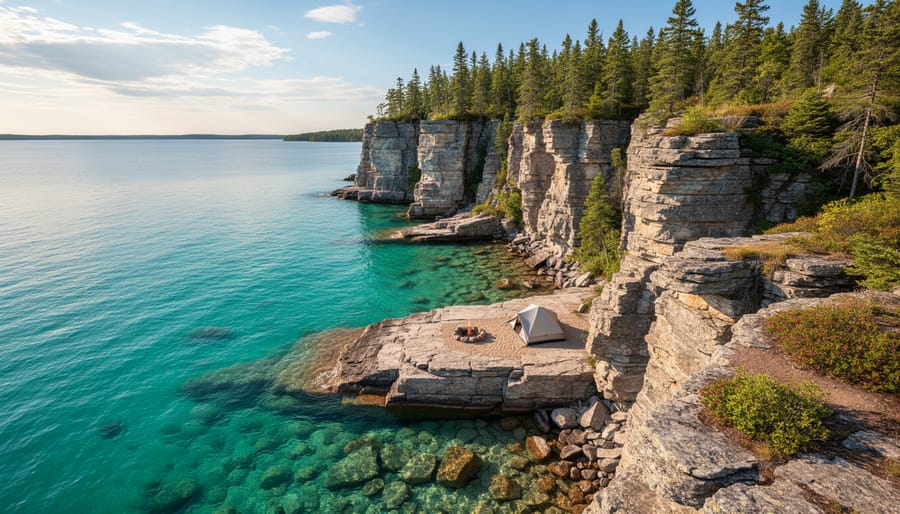
Georgian Bay and the Bruce Peninsula might be the place that makes you rethink what Ontario water can look like. On a clear day, the bay glows turquoise against pale limestone cliffs, and you’ll swear you’ve wandered somewhere far more tropical. Bruce Peninsula National Park and Fathom Five National Marine Park draw hikers, paddlers, and snorkellers, while the Bruce Trail winds along the Niagara Escarpment, offering lookouts that reward every steep step.
Campers here tend to wake early, coffee in hand, just to catch the light on the water. Cooler evenings call for a warm layer and a long chat around the fire.
Because this corner of the province is so beloved, popular campgrounds and parking areas often require reservations well ahead of time. A little planning goes a long way, so check the official park sources for current rules and booking details before you head out.
Northern Ontario’s Wild Frontier
Head far enough north and Ontario starts to feel like a different country. The Lake Superior shoreline stretches out in rugged cliffs, pebble beaches, and cold, clear water that stays brisk even in August. Behind it, the boreal forest rolls on with spruce, jack pine, and birch, and the sky at night is so full of stars it can stop you mid-sentence.
What strikes most campers is the quiet. Sites are farther apart, crowds are thinner, and a morning paddle can feel like you have the whole lake to yourself. Pack a little extra patience for long drives, because the distances up here are real, and top up on fuel and groceries whenever you pass through a town.
Those towns are part of the draw. Locals tend to greet visitors like neighbours, happy to point you toward a favourite lookout or a bakery worth the detour. Stop for a chat, and you’ll often leave with a better plan than the one you arrived with.
Planning Your Ontario Camping Trip
Reservations and Timing
Popular Ontario campsites fill up well in advance, so the single best habit you can build is booking early. Lakeside and beachfront spots at well-loved parks tend to go first, especially around long weekends, so check Ontario Parks’ official site for current booking windows and rules rather than guessing. If you’re eyeing the Niagara region, these Niagara campground tips can help you plan.
Don’t overlook the shoulder seasons, either. Spring brings blooming trillium, fewer crowds and quiet trails. Summer is made for swims, canoe days and late sunsets. Fall delivers those famous colours and crisp, bug-free nights. Each season asks something different of your gear, so it pays to pack smarter for the weather you’re likely to meet.
Beating the Bugs and Reading the Weather
Bugs and weather are just part of the Ontario camping deal, and a little planning keeps them from stealing the show. Black flies tend to show up in late spring, mosquitoes take over around dusk, and both back off when a breeze rolls in. Pack long sleeves, a bug jacket or head net, and a repellent you trust, then pick a campsite with some open air if you can.
Ontario weather changes its mind quickly. A sunny morning can turn into an afternoon shower, and lake nights get cooler than you’d guess. Layers, a good rain shell, and a tarp over the picnic table make wet spells feel cozy instead of grim. A hot mug and an easy camping breakfast go a long way when the drizzle sets in. Check the forecast before you leave, and expect the occasional surprise.
Camping Safely and Respectfully
Ontario’s wildlife is part of the magic, so a few habits keep everyone safe. Store food, garbage, and scented items in a locked vehicle or a proper bear-resistant container, never in your tent. A cooler left out overnight is an open invitation. Cooking away from where you sleep helps too, and so does planning easy meals; plenty of campers swear by Ontario brunch ideas that need minimal fuss and minimal leftovers.
Keep fires small, in designated rings, and fully out before you leave or sleep. Drown them, stir the ashes, and feel for warmth. Check for any current fire bans before you go.
Leave No Trace is simply good neighbourliness: pack out what you pack in, stay on marked trails, and keep your site tidy with organized gear. Leave it better than you found it.
Giving Back: Volunteer and Community Connections for Campers
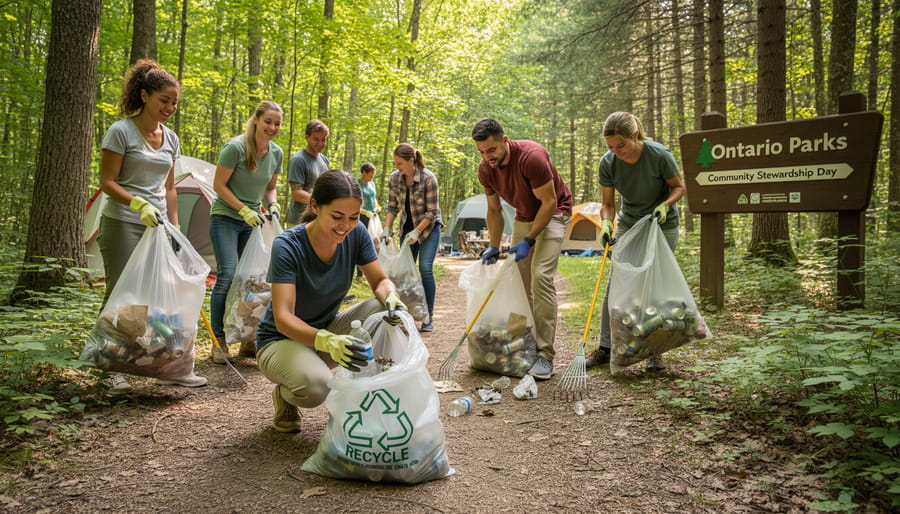
One of the nicest things about camping in Ontario is how easily a weekend away can turn into a chance to give something back. Many of the people who keep our parks and trails in good shape are neighbours who simply showed up one day with a pair of work gloves.
Trail clean-ups are a great place to start. Local conservation groups and park volunteers often organize stewardship days where campers and residents pick up litter, repair boardwalks, or help restore trampled shoreline. They’re usually relaxed, social, and a good way to meet people who love the same places you do.
Many parks also have a “Friends of” group, a volunteer organization that supports the park through fundraising, education, and hands-on projects. These groups tend to welcome newcomers warmly, and they’re a lovely way to feel rooted in a place you only visit now and then. Some help run interpretive programs, guided hikes, or kids’ nature activities, which is a fun way to share your own love of the outdoors with younger campers.
If you like contributing in a quieter way, look into citizen science. Campers can often help by logging bird sightings, noting when wildflowers bloom, or reporting frogs and turtles they spot along the water. Those observations can add up to something meaningful for the people studying and protecting Ontario’s wildlife.
Then there are the community gatherings that make a campground feel like a village. Some parks and nearby towns host campfire evenings, storytelling nights, and seasonal events where visitors and locals mingle. Even a simple “pull up a chair” campfire chat can become a trip highlight.
Opportunities change from year to year and from park to park, so the best approach is to ask. Check in with the park office, browse the website of the local conservation authority, or look up the park’s volunteer group before you go. Most are glad to tell you what’s coming up and how to get involved.
Giving even a couple of hours often leaves you with a deeper connection to the landscape, a few new friends, and the quiet satisfaction of leaving a favourite spot a little better than you found it.
Common Questions About Camping in Ontario
Still have a few questions before you pack the car? You’re in good company. Most first-time Ontario campers wonder about the same handful of things, and the answers are friendlier than you might expect.
When does camping season run in Ontario?
Most people camp from late spring through early fall, with summer being the busiest stretch. Many parks also offer shoulder-season and even winter options, but services change, so check Ontario Parks for current operating dates before you go.
Can beginners camp in Ontario?
Absolutely. Drive-in campgrounds with washrooms, beaches, and park staff nearby are a gentle way to learn the ropes, and you can build up to canoe-in or backcountry trips later.
Do I need a permit for Crown land or the backcountry?
Rules differ depending on where you camp. Interior sites in provincial parks generally need a reservation or permit, and Crown land has its own guidelines, so confirm the current requirements with the relevant provincial authority first.
How should I handle bears and other wildlife?
Keep food, garbage, and scented items stored securely and away from your sleeping area, and never feed animals. Give wildlife plenty of space and let them move on; a tidy campsite is the best protection.
Are pets welcome at campsites?
Many campgrounds welcome dogs, usually on a leash and with some area restrictions, such as certain beaches. Check the specific park’s pet policy before you book so your four-legged friend can come along.
If something still feels uncertain, park offices and local campground hosts are usually delighted to help. Folks across Ontario love sharing tips, and a quick chat often turns into a recommendation for a hidden lake, a favourite trail, or a community campfire night worth joining.
However you like to spend your nights outdoors, Ontario has a spot that fits. Maybe it’s a lakeside drive-in site with a short walk to the beach, a canoe route that leaves cell service far behind, or a cozy yurt with a wood stove for those chilly shoulder-season evenings. Each region brings its own personality, from the lakeshores of the south to the quiet boreal stretches of the north, and each one rewards a little curiosity.
So here’s a gentle nudge: pick a corner of the province you haven’t explored yet, or try a camping style that’s new to you. If you’ve always car camped, consider a night in a cabin or a short paddle-in trip. If you’re a backcountry regular, take the kids to a campground with a campfire program.
And on your next trip, keep an eye out for a way to give back. A trail clean-up, a stewardship day, or a community campfire gathering is a great way to meet neighbours and leave a place better than you found it.
Most of all, we’d love to hear from you. What’s your favourite campsite, your funniest tent mishap, your best loon-call memory? Share your campfire stories, and let’s keep the fire going together.