
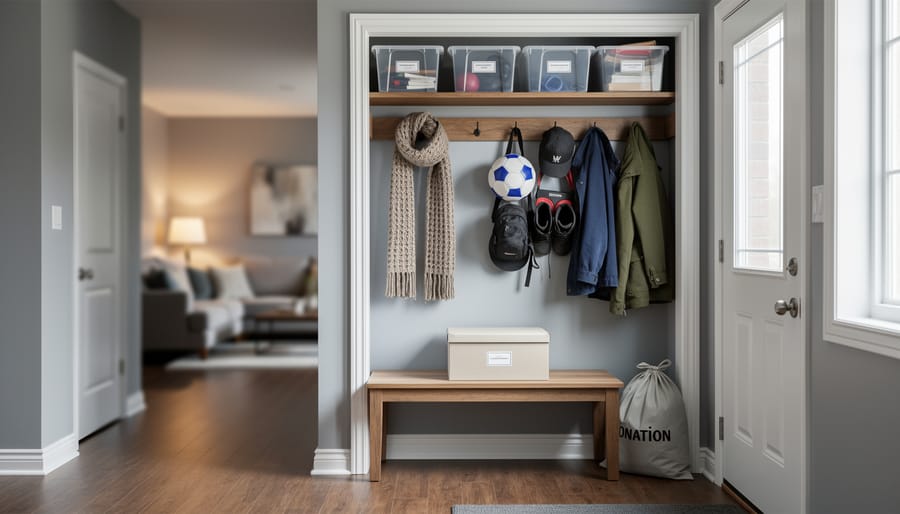
A clutter-free home isn’t about minimalism or perfection. It’s about creating functional, peaceful spaces that work with Ontario’s seasonal rhythms and your family’s real needs. The method is simple: establish one-in-one-out rules, designate homes for every item, and build daily five-minute reset habits that prevent chaos from creeping back in.
For Ontario residents, the challenge runs deeper than most organizational guides admit. Winter gear piles up by November, summer equipment takes over basements, and four-season wardrobes demand twice the storage of single-climate regions. Add in kids’ sports schedules, community event materials, and the volunteer supplies many of us keep on hand, and suddenly every closet is fighting a losing battle.
The good news? You don’t need a bigger house or a complete overhaul. What works here blends practical strategies with the community-minded spirit that defines Ontario living. These ten tips tackle real obstacles, from managing seasonal rotations in condos to organizing donation drives that benefit local charities. Each approach respects how we actually live: busy schedules, tight budgets, and homes that serve as launch pads for school events, neighbourhood cleanups, and weekend getaways.
Start with one room this week. The transformation spreads faster than you’d expect, and the mental clarity that follows makes every surface you reclaim worth the effort.
Why Ontario Homes Need Thoughtful Organization
Ontario homes work harder than most. Between winter parkas and summer camping gear, hockey equipment and hiking boots, our living spaces need to accommodate four distinct seasons, each with its own wardrobe and activity requirements. Add in the decorations for multiple holidays, supplies for school fundraisers, and the coats of neighbors who drop by for coffee, and it’s no wonder clutter accumulates quickly.
The Ontario lifestyle makes organization even more critical. Many residents volunteer with local organizations, host community gatherings, or participate in neighborhood events throughout the year. Your entryway might need to handle soccer cleats on Monday, donations for the food drive on Wednesday, and guests arriving for a weekend potluck. Without thoughtful systems in place, these items pile up in corners, overflow from closets, and turn functional spaces into obstacle courses.
The challenge intensifies in condos and smaller homes common throughout Ontario cities, where storage space comes at a premium. You can’t simply toss winter boots in a spare room when May arrives, and finding room for both your bike and your volunteer supplies requires strategy. But here’s the good news: when Ontario homes are organized with intention, they become launching pads for the vibrant community life that makes this province special. Less time hunting for misplaced items means more time at the farmers’ market, the community center, or simply enjoying your neighbourhood.
How We Chose These Organizational Tips
We didn’t just pull these organizational tips from thin air. Each strategy made the cut because it works for real Ontario homes and the way we actually live here.
First, practicality ruled our choices. These aren’t Pinterest-perfect ideas requiring custom built-ins or major renovations. They’re solutions you can implement this weekend with tools and supplies you likely already own or can grab affordably from local stores.
Budget-friendliness mattered too. Not everyone can invest in professional organizers or expensive storage systems. These tips work whether you’re furnishing your first apartment or managing a family home, with most requiring minimal financial investment.
We also considered Ontario’s unique lifestyle. Our four distinct seasons mean managing winter boots, summer gear, holiday decorations, and sports equipment. Our community-focused culture means homes often serve as gathering spots for neighbors and volunteer activities. These tips accommodate that reality.
Finally, we ensured adaptability across home types. Whether you’re in a downtown condo with limited storage, a suburban townhouse, or a family home with a basement and garage, you’ll find approaches here that fit your space. Different homes face different challenges, and these strategies flex to meet them.
1. Start with the Seasonal Switchover Strategy
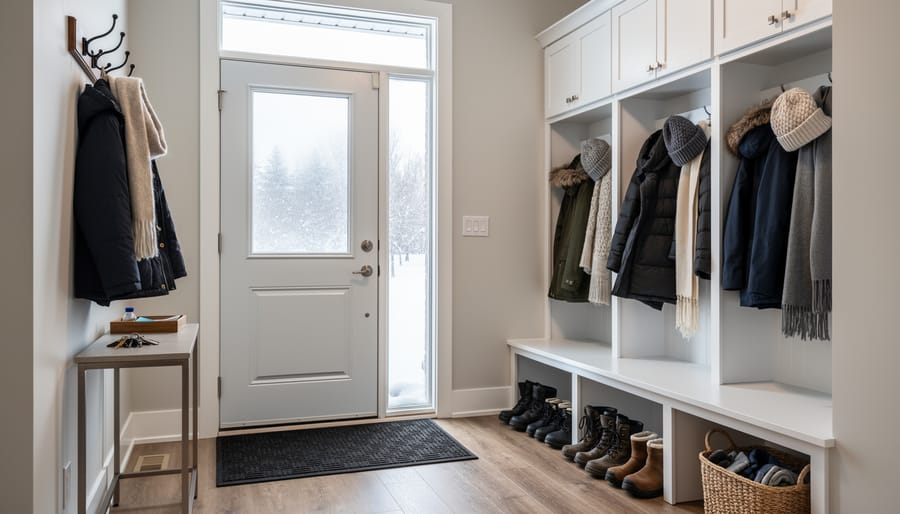
Living in Ontario means managing gear for four distinct seasons, and that rotation is your first decluttering opportunity. Instead of cramming every coat, boot, and piece of equipment into your front closet year-round, create a storage system that swaps items in and out as the weather changes.
Start by designating prime real estate, your entryway closet and mudroom hooks, for current-season items only. When spring arrives, winter parkas move to basement storage bins while rain jackets take their place. Summer sandals replace snow boots. This simple rotation immediately clears half your daily-use storage.
For off-season gear, invest in labeled bins or vacuum-sealed bags that stack neatly in your basement, garage, or under beds. Group items by season and family member so retrieval is quick when temperatures shift. Store bulky winter coats in garment bags hanging in a spare closet rather than taking up valuable kitchen-level space.
The key is timing your switchover with Ontario’s actual weather patterns, not the calendar. Most families find April and October ideal transition points. Set a reminder, involve everyone in the household, and make it a twice-yearly ritual. You will reclaim usable space and always know exactly where to find what you need.
2. Create Community-Ready Zones
Ontario homes thrive when entryways and common areas can handle both daily family chaos and spontaneous gatherings. Your mudroom or entry zone isn’t just for your household, it’s the first space neighbors see when they drop by for coffee or pick up those bake sale contributions you volunteered.
Start by dividing your entryway into functional zones. Assign each family member a dedicated hook and basket for coats, bags, and shoes. This prevents the pile-up that happens when everyone dumps belongings in random spots. Add a separate section for guest items, a few empty hooks and a basket for visitor shoes signal that your home welcomes company without awkwardness.
Keep a designated bin or shelf for volunteer materials and community event supplies. Whether it’s Girl Guide cookie order forms, park cleanup gloves, or items for the neighborhood swap meet, having one spot means you’re not frantically searching when it’s time to head out.
In coat closets, use clear bins labeled by season or activity: winter scarves, summer sports gear, community event decorations. This system lets you grab what you need quickly and makes hosting easier when you can outfit unexpected guests for an impromptu backyard fire.
A small bench with storage underneath does double duty, seating for putting on boots and hidden space for reusable shopping bags or items awaiting donation.
3. Adopt the One-In, One-Out Rule
The simplest way to prevent clutter from creeping back? For every new item that enters your home, one similar item leaves. This one-in, one-out rule creates a natural boundary that stops accumulation before it starts.
Apply this principle category by category. Bought a new sweater at a Queen Street boutique? Choose one from your closet to donate. Picked up another coffee mug at a craft fair in Stratford? Time to let go of the chipped one you’ve been ignoring. Grabbed a book from a local author event? Pass along one you’ve finished to your neighborhood Little Free Library.
Where this rule really shines is managing those impulse purchases that make Ontario living so rich. Festival t-shirts from Caribana, mugs from farmers’ markets, art prints from local galleries, these treasures multiply fast. Before buying that commemorative item, decide what it’s replacing or commit to displaying it properly rather than letting it collect dust.
Kitchen gadgets deserve special attention here. That specialty tool from a cooking demonstration might seem essential, but if it means your drawer won’t close anymore, something needs to go first. The science behind 15-minute routines shows how small, consistent habits prevent overwhelming cleanup sessions later.
You don’t need perfection. Even following this rule 80% of the time keeps your space manageable and your favorite Ontario finds visible instead of buried.
4. Maximize Vertical Storage Solutions
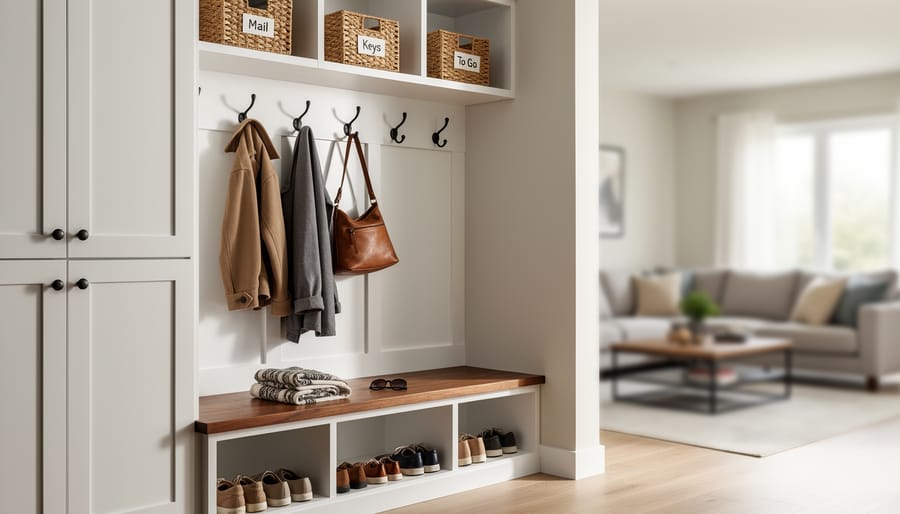
When you’re working with limited square footage in an Ontario condo or townhome, going vertical is one of the smartest moves you can make. Most of us underuse the space between our shoulders and the ceiling, leaving valuable real estate empty while our floors and counters overflow.
Start by surveying your walls, closets, and storage areas with fresh eyes. That blank wall in your entryway could hold hooks for coats and bags. Your garage ceiling can accommodate overhead racks for seasonal bins. Even narrow spaces beside doorways or between windows can fit slim shelving units for books, plants, or everyday items.
Here are proven vertical storage solutions that work particularly well in Ontario homes:
- Wall-mounted bike racks to free up garage or balcony floor space
- Overhead garage storage systems for camping gear, holiday decorations, and winter tires
- Floating shelves in kitchens, bathrooms, and living areas for frequently used items
- Pegboards with hooks in mudrooms, craft rooms, or workshops for flexible, visible storage
- Tall, narrow bookcases that maximize height without consuming floor area
- Stackable closet organizers that double or triple hanging space
- Over-door organizers for shoes, cleaning supplies, or accessories
The beauty of vertical storage is that it keeps your belongings accessible and visible while maintaining clear pathways and surfaces. This approach works especially well in basements where you can install sturdy shelving along walls for tools, sports equipment, and storage bins. Just remember to anchor heavy shelving properly and keep frequently used items at a comfortable height.
5. Designate a Donation Station
Set up a permanent donation station in your home, a designated basket, box, or bin where you place items as soon as you realize you’re no longer using them. Choose a convenient spot like a closet corner, the garage, or a mudroom shelf where the container won’t be in the way but remains visible enough to remind family members to contribute.
This simple system transforms decluttering from an overwhelming annual project into an ongoing habit. When you notice the donation bin is full, you already have a batch ready to drop off, making it easy to follow through rather than letting bags of donations sit in the garage for months.
Consider keeping a small list near your donation station noting what local organizations need most, so you can be intentional about where your items will do the most good. Some Ontario residents even coordinate donation drop-offs with neighbors, making it a quick community outing that supports local causes while keeping everyone’s homes clutter-free. The donation station becomes your bridge between decluttering and community service, turning excess belongings into opportunities to help others.
6. Implement the 15-Minute Daily Reset
A 15-minute daily reset transforms clutter management from an overwhelming weekend project into an effortless habit. Set a timer for 15 minutes each evening and tackle visible clutter in your main living spaces, the kitchen counter, living room coffee table, entryway bench, and dining table. This isn’t deep cleaning; it’s simply returning items to their designated homes.
The beauty of this approach for Ontario households lies in staying perpetually guest-ready. When neighbors drop by or you’re asked to host a last-minute committee meeting, your home welcomes visitors without the frantic pre-arrival scramble. You’ll find yourself saying yes to spontaneous gatherings more often.
Make it a family routine. Play music, divide spaces between household members, or turn it into a game with kids. The consistent 15-minute investment prevents the dreaded Saturday clutter avalanche that steals hours from community events and personal time.
Stick to the timer, when it rings, you’re done. This boundary keeps the task manageable and sustainable. You’re not aiming for perfection; you’re maintaining the organized systems you’ve already established. Over weeks, you’ll notice how much easier it becomes to keep surfaces clear and your home feeling calm and inviting.
7. Organize by Activity Zones
Group your belongings by how you actually use them, not by category alone. Creating dedicated activity zones transforms scattered clutter into functional spaces that serve your Ontario lifestyle.
Start by identifying your household’s regular activities: homework sessions, craft projects, reading, sports gear prep, or meal planning. Assign each a specific area with everything needed stored right there. Your kids’ homework station might include school supplies, reference books, and chargers in a corner of the dining room. A craft zone in the basement keeps all creative materials together instead of migrating through every closet.
This approach works beautifully for Ontario’s active families. Designate one mudroom section for hockey equipment, another for hiking gear. Create a coffee station with mugs, filters, and your favourite local roast all within arm’s reach. When everything for an activity lives in one spot, you’ll stop hunting through multiple rooms and accumulating duplicates.
The zones don’t need dedicated rooms, just consistent locations. A reading nook is simply a chair, lamp, and small bookshelf clustered together. What matters is that family members know exactly where to find what they need and where to return it. You’ll spend less time tidying and more time actually doing the activities you love.
8. Tackle Paper Clutter with a Simple System
Paper clutter sneaks up fast in Ontario homes, community event flyers, school newsletters, tax documents, and that ever-growing pile of mail on the kitchen counter. The key is handling paper once and having a clear home for what you actually need to keep.
Set up three simple categories: Action Required (bills to pay, forms to return), File (important documents like insurance papers, receipts), and Recycle. A tiered tray or wall-mounted organizer works perfectly for the first two categories, while the recycle bin handles the rest immediately.
Go digital where possible. Take photos of event flyers and community notices instead of cluttering your fridge. Most banks and utilities offer paperless billing, cutting your incoming mail significantly. Scan important documents and store them in a cloud folder, especially useful for tax season when you need everything in one place.
For school papers and kids’ artwork, create a memory box for each child but be selective. Photograph everything, keep only the truly special originals, and recycle the rest quarterly.
Process mail right by the recycling bin. Junk goes straight in, envelopes get opened immediately, and papers land in their designated spots. No counter piles, no guilt, just a system that keeps paper from taking over your space.
9. Use Clear Containers for Visibility
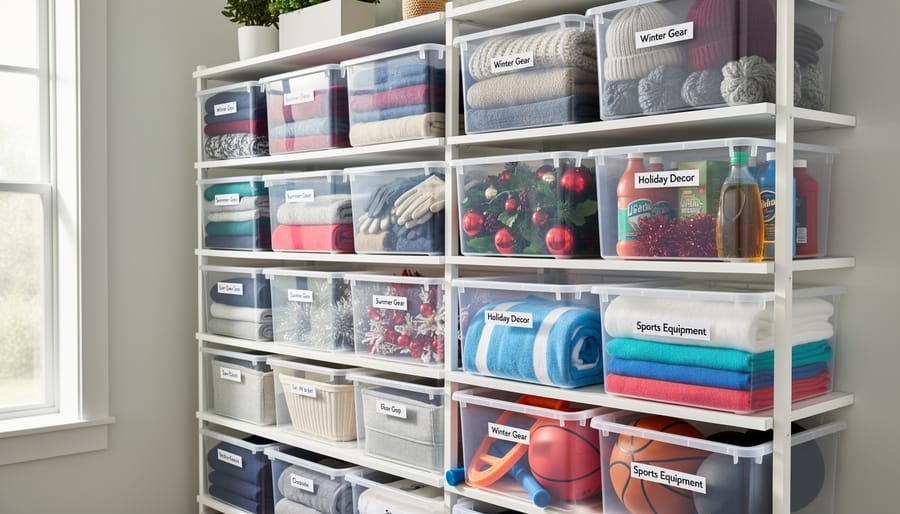
Switching to clear plastic bins transforms basement and garage storage from a mystery game into an instant inventory system. When you can see your Christmas decorations, summer camping gear, or kids’ outgrown clothes at a glance, you stop buying duplicates and actually use what you own.
Ontario homes often have excellent basement or garage space, but that becomes a problem when those areas turn into black holes for stuff. Cardboard boxes hide their contents, forcing you to open five before finding your winter scarves. Clear containers eliminate that frustration entirely.
Label each bin on the top and at least one side with its contents and which season or holiday it belongs to. Stack similar items together, all Halloween through a bin of spider webs and costumes, all sports equipment visible in one corner, all gift-wrapping supplies ready to grab.
This system shines during Ontario’s seasonal transitions. When November hits, you know exactly which bin holds your ice scrapers and snow pants. Come spring, the camping supplies are right where you can see them. No more buying a third set of string lights because you forgot you had two boxes buried in the back.
10. Schedule Seasonal Decluttering Days
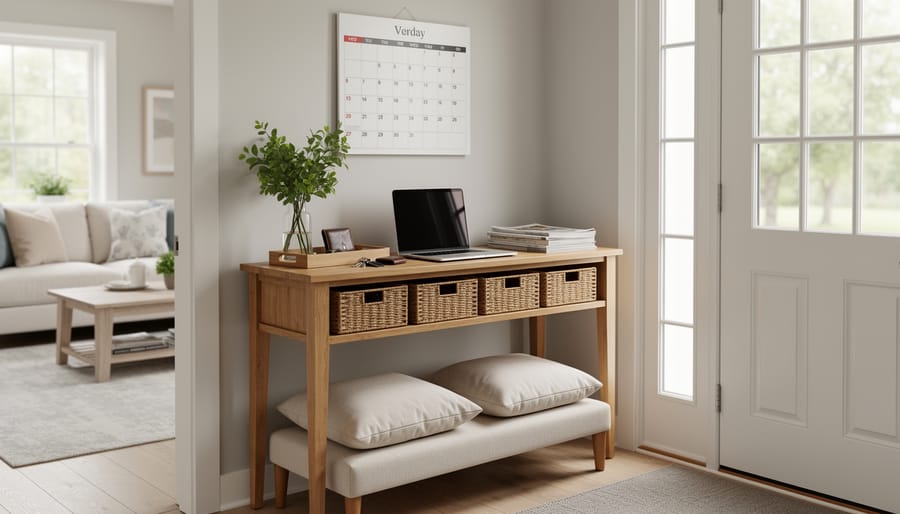
Making decluttering a regular habit becomes much easier when you tie it to Ontario’s four distinct seasons. Instead of facing an overwhelming annual purge, schedule quarterly decluttering sessions that align naturally with seasonal transitions.
Plan your decluttering days around practical seasonal markers: early spring before gardening season starts, late June before summer vacation, mid-September when kids return to school, and early December before holiday preparations begin. These times already involve some household reorganization, so adding a decluttering focus makes sense.
Turn these sessions into family activities by assigning each person a zone or category to tackle. Kids can sort through toys and clothes they’ve outgrown, while adults review seasonal gear, kitchen items, and closet contents. Set a timer for focused two-hour sessions rather than attempting marathon all-day efforts that lead to burnout.
Consider organizing neighborhood swap events to make decluttering more social and sustainable. Spring clothing swaps, fall sports equipment exchanges, and holiday decoration trades let you pass along items you no longer need while finding treasures others are releasing. These community gatherings reinforce connections with neighbors while keeping usable items in circulation rather than heading to landfills.
Mark your calendar now for all four seasonal sessions. Consistency transforms decluttering from a dreaded chore into a manageable routine that maintains your organized home year-round.
Making Organization Stick: Your Ontario Home, Simplified
A clutter-free home doesn’t happen overnight, and that’s perfectly fine. Start with whichever tip resonates most, maybe it’s the seasonal switchover that’ll free up your entryway, or perhaps that donation station will finally clear out the basement corner. Once you see how one small change creates breathing room, the momentum builds naturally.
When your home runs smoothly, you’ve got mental space and actual time for what makes Ontario living special: volunteering at the community centre, hosting neighbors for coffee, or simply enjoying a peaceful evening after exploring local festivals. Organization isn’t about perfection; it’s about creating a base that supports the active, connected lifestyle you want.
How long does decluttering a whole house take?
It varies widely depending on your home size and clutter level, but tackling one room per weekend is realistic for most Ontario households. Many people see noticeable improvements within a month of consistent effort.
What if I live with family members who struggle to let go of things?
Start with your own spaces first to demonstrate the benefits, then suggest collaborative projects in shared areas. Respect others’ belongings and timelines, leading by example often inspires gradual change.
Where can I donate items in Ontario?
Goodwill, Salvation Army, Habitat for Humanity ReStores, and local shelters accept household goods throughout Ontario. Many community centres also run donation drives for specific needs.
How do I keep things organized with kids in the house?
Create accessible storage at their height, establish simple routines like the 15-minute reset, and involve them in decisions about their spaces. Make it a family habit rather than a parent-only responsibility.
The real reward isn’t just a tidier house, it’s the ease you feel when someone stops by unexpectedly, or when you can locate your volunteering supplies in seconds instead of frantic minutes. Your home becomes a true home base, welcoming and ready for whatever Ontario’s vibrant community life brings your way.