

Housing prices across Ontario dropped by an average of 8.3% in May 2026 compared to the same month last year, according to the latest MLS Home Price Index data, with some cities posting double-digit declines while others remain relatively stable. Toronto and surrounding GTA municipalities saw benchmark prices fall between 6% and 11%, while Ottawa experienced a sharper 12.4% contraction. Smaller markets like Kingston and Guelph recorded more modest decreases in the 4-7% range.
If you’ve been watching the market anxiously, whether you’re hoping to buy your first home, considering selling, or simply trying to understand what your property is worth today, these numbers represent the most significant correction Ontario has seen in nearly a decade. The decline isn’t hitting every neighbourhood equally. Detached homes in suburban communities have lost more value than downtown condos in many cases, and luxury properties above the million-dollar mark are sitting on the market far longer than entry-level units.
Three forces are driving this shift: rising interest rates that pushed monthly mortgage payments beyond reach for many buyers, a wave of new condo completions flooding the market with inventory, and shifting migration patterns as remote work changes where people choose to live. Understanding which of these factors matters most in your specific city will determine whether this is the moment to act or to wait.
The good news? Market corrections create opportunities for both buyers and sellers who understand the landscape. This guide breaks down the numbers city by city, explains what’s pushing prices down in each community, and gives you the decision-making framework to navigate your next move with confidence.
Understanding the Decline: What the Numbers Tell Us
The numbers paint a clear picture of what’s happening in Ontario’s housing market right now. As of May 2026, the national benchmark home price sits at $667,700, down 4.1% from May 2025. That year-over-year decline translates to roughly $28,500 less than what the same home would have sold for twelve months ago. Month-over-month, prices edged down just 0.1% from April 2026, showing the decline has slowed considerably from earlier in the cycle.
These percentages might sound abstract, but they represent real money in your pocket or on your mortgage. For someone buying that benchmark home, the 4.1% annual decline means you’re paying nearly $29,000 less than buyers did last spring. If you purchased in May 2025, your home’s market value has decreased by that same amount, though that only matters if you’re selling soon or need to refinance.
The MLS® Home Price Index gives us these numbers, and it’s worth understanding why this measurement matters. Unlike simple averages or medians that can swing wildly when more expensive or cheaper homes sell in a given month, the MLS® HPI uses a sophisticated statistical model. It tracks the same types of homes over time, accounting for quantitative features like square footage and bedrooms alongside qualitative factors like finishes and location. This approach filters out the noise and shows you what’s actually happening to home values in your community, making it far more reliable than headline numbers you might see that compare apples to oranges.
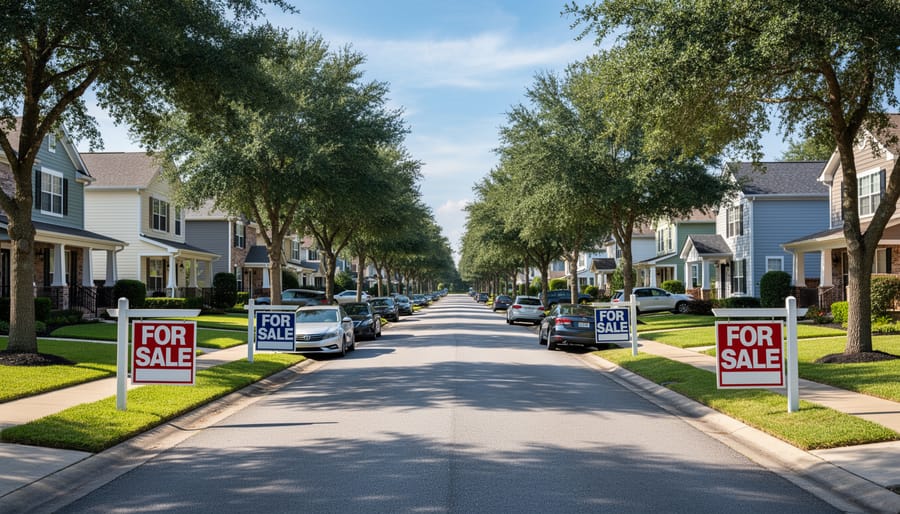
Housing Price Declines Across Ontario Cities
The housing price decline is playing out differently across Ontario’s cities and regions, shaped by each community’s unique market conditions. While the national benchmark shows a 4.1% year-over-year decrease, Ontario’s diverse urban centers are experiencing this shift at varying rates and intensities.
The Greater Toronto Area, as Canada’s largest real estate market, tends to set the tone for provincial trends. When Toronto’s market softens, the ripple effects typically spread to surrounding communities like Mississauga, Brampton, and Markham. However, these GTA suburbs don’t always mirror Toronto’s exact trajectory. Some neighborhoods maintain stronger price stability due to newer housing stock or ongoing transit infrastructure investments, while others may see steeper declines if they’re heavily dependent on investor activity or have oversupply issues.
Ottawa’s housing market often moves independently from the GTA, influenced by its status as the nation’s capital and the stability of federal government employment. The city’s price adjustments tend to be more gradual, with local factors like technology sector growth and proximity to government districts playing a larger role than provincial trends. When Ottawa’s market declines, it’s usually less dramatic than swings in speculative markets.
Hamilton has transformed significantly in recent years, attracting buyers priced out of Toronto. This migration pattern means Hamilton’s current price decline is partly a correction from rapid pandemic-era gains. The city’s industrial heritage areas and newly developed waterfront zones are responding differently to the broader downturn, creating a patchwork of micro-markets within the city itself.
Mid-sized cities like London, Kitchener-Waterloo, and Windsor face their own dynamics. London’s market is influenced by Western University and healthcare sector employment. Kitchener-Waterloo’s technology corridor attracts a different buyer profile, creating demand patterns distinct from manufacturing-heavy communities. Windsor’s proximity to the U.S. border and automotive sector ties add another layer of complexity.
Several factors explain why Ontario cities experience different rates of price decline:
- Local inventory levels: Cities with more listings relative to buyers see steeper declines, while markets with constrained supply hold prices better.
- Employment and population growth: Communities with expanding job markets and population inflows cushion against sharp price drops.
- New construction activity: Areas with significant condo development or subdivision growth face different pressures than established neighborhoods with limited new supply.
- Community amenities and infrastructure: Cities investing in transit, schools, and recreational facilities tend to maintain price stability better than those with aging infrastructure.
- Proximity to major urban centers: Bedroom communities within commuting distance of Toronto or Ottawa often experience amplified price swings in both directions.
Understanding your local market means looking beyond provincial headlines to the specific conditions in your community. A 4.1% national decline might translate to a 2% adjustment in one Ontario city and a 6% drop in another, depending on these localized factors. Your real estate board’s monthly reports and the MLS® HPI data for your specific region provide the most accurate picture of what’s happening where you live.
Breaking Down the Price Decline: What’s Affecting Your Community
The headline decline figures tell only part of the story. When you look at why your neighborhood’s prices are shifting differently from the one across town, you start to see how the MLS® Home Price Index captures the real complexity of Ontario’s housing market.
The sophisticated statistical model behind the MLS® HPI breaks down each property into quantitative and qualitative components. Quantitative factors include the measurable attributes: square footage, number of bedrooms and bathrooms, lot size, garage spaces, and home age. A 2,200-square-foot detached home with four bedrooms naturally commands a different price point than a 1,400-square-foot townhouse with three bedrooms, even in the same postal code. When the market shifts, these physical characteristics influence how much individual properties decline.
Qualitative factors add another layer of nuance. The MLS® HPI accounts for features like interior finishes, recent renovations, location within the neighborhood, proximity to amenities, school catchment areas, and overall property condition. Two identical floor plans on the same street can see different price movements if one backs onto a park while the other faces a busy road. School district boundaries matter tremendously for families, which explains why certain pockets hold value better during broader declines.
This breakdown helps explain the variation you’re seeing across Ontario communities. Several key factors determine why some neighborhoods experience steeper declines:
- Property type variations: detached homes may decline differently than condos or townhouses
- Neighborhood desirability shifts: areas with strong school ratings or new transit access maintain pricing better
- Inventory levels: neighborhoods flooded with listings see more aggressive price adjustments
- Seasonal patterns: spring listings compete differently than fall or winter inventory
- Interest rate environment: higher borrowing costs affect buyer budgets across all price points
- Buyer sentiment: confidence levels vary between first-time buyers and move-up purchasers
The model’s sophistication makes the MLS® HPI less volatile than simple average or median calculations. When a handful of luxury properties sell in one month, averages spike upward even if most homes held steady. The MLS® HPI controls for these distortions by tracking similar properties over time, giving you a clearer picture of what’s actually happening to home values in your specific community segment.
Understanding these components helps you interpret whether a 4.1% year-over-year decline means the same thing for a renovated bungalow in a sought-after school zone versus a dated split-level in an area with rising inventory. The answer is almost certainly no, and that’s exactly what the breakdown reveals.

Factors Behind Ontario’s Declining House Prices
Several interconnected forces have driven the housing price decline across Ontario in 2026, and understanding them helps you see where the market might head next. While national statistics show a 4.1% year-over-year drop in benchmark prices, Ontario’s market reflects both these broader Canadian trends and region-specific pressures that vary from Windsor to Ottawa.
Inventory levels have shifted dramatically. For years, Ontario cities operated as seller’s markets with more buyers than available homes. That dynamic has reversed in many communities, with more listings sitting unsold for longer periods. When sellers outnumber eager buyers, prices naturally soften as competition among sellers replaces competition among buyers. This shift doesn’t happen uniformly, some Toronto neighborhoods still see multiple offers, while similar properties in other areas languish.
Interest rates remain a persistent headwind. Higher borrowing costs directly reduce what buyers can afford to pay, which shrinks the pool of qualified purchasers and puts downward pressure on prices. A household that could have stretched to $800,000 at 2021 rates might now qualify for $650,000 with the same income, forcing sellers to adjust expectations or wait for better conditions.
| Factor | How It Affects Prices | Impact on Ontario Markets |
|---|---|---|
| Inventory Changes | More listings dilute seller power, reducing price premiums | Varied by city, GTA suburbs see more supply growth than core Ottawa |
| Interest Rates | Higher borrowing costs reduce buyer purchasing power | Hits move-up buyers hardest, affecting mid-range Ontario homes most |
| Buyer Demand | Fewer active buyers means longer selling times and price cuts | Immigration patterns still support Toronto/Ottawa but weaker in smaller cities |
| New Construction | More supply options give buyers alternatives to resale market | Concentrated in growth corridors, pressuring nearby resale prices |
| Economic Conditions | Job market uncertainty makes buyers cautious, delaying purchases | Stronger employment in tech/government hubs cushions Ottawa, Hamilton |
Economic uncertainty makes buyers cautious. When layoffs hit the news or household budgets feel tight from inflation, people postpone major purchases. Fewer buyers means sellers must be more realistic with pricing. Ontario’s employment picture varies, cities with diversified economies or strong public sector presence weather storms better than those reliant on single industries.
Policy changes also play a role. Mortgage stress tests, foreign buyer restrictions, speculation taxes, and municipal development charges all influence who can buy and what gets built. Some measures cool overheated markets intentionally, while others create unintended supply constraints that eventually reverse.
New construction activity matters more than many realize. When developers deliver hundreds of condo units or townhomes in Kitchener or Barrie, those new options compete directly with resale inventory. Buyers compare what $650,000 buys in a brand-new build versus a 15-year-old home, and that competition forces resale sellers to adjust pricing.
These factors don’t operate in isolation, they reinforce each other. Rising rates dampen demand, which increases inventory, which pressures prices down, which makes buyers wait for further drops. The cycle feeds itself until something shifts, whether economic conditions improve, rates stabilize, or pent-up demand finally overwhelms caution.

Should You Buy, Sell, or Wait? Making Sense of the Decline
A declining market creates both anxiety and opportunity. The 4.1% year-over-year drop in Ontario’s housing prices prompts a fundamental question: should you make a move now, or wait to see where the market settles?
For buyers, declining prices mean more purchasing power. Your budget stretches further than it did a year ago, and sellers may be more willing to negotiate. However, timing a market bottom is nearly impossible, and if you purchase today, prices could continue falling for months. You’ll also face the same mortgage rates as everyone else, which remain a significant factor in affordability regardless of purchase price.
- Home prices are lower than they were a year ago, giving you more options within your budget.
- Less competition from other buyers means you have more negotiating power.
- You can start building equity immediately rather than continuing to rent.
- Prices may continue declining, meaning you could overpay compared to waiting six months.
- Your home equity could decrease further in the short term if the decline continues.
- Mortgage rates haven’t dropped proportionally to home prices, affecting overall affordability.
Sellers face their own dilemma. Waiting might mean accepting an even lower price if the decline continues, yet selling now locks in current losses. Consider your personal timeline: if you need to relocate for work or family reasons, market timing becomes secondary to life circumstances.
This is where professional guidance proves valuable. A local realtor understands neighbourhood-specific trends that national statistics can’t capture. They’ll tell you whether your street is seeing multiple offers or extended listing periods. Mortgage brokers help you model different scenarios, showing what monthly payments look like at various price points and interest rates.
You can certainly research independently using MLS® HPI data from your local real estate board, but professionals add context that raw numbers miss. They’ve seen previous market cycles and can help you avoid panic-driven decisions. Most offer free initial consultations, making it worthwhile to gather expert perspectives before committing to any major housing decision during this uncertain period.

What the MLS® Home Price Index Reveals
The MLS® Home Price Index offers Ontario residents a far more reliable window into housing market shifts than the simple averages you might see in headlines. Unlike measures that just add up sale prices and divide by volume, the MLS® HPI uses a sophisticated statistical model that accounts for both quantitative features (square footage, number of bedrooms, lot size) and qualitative characteristics (finishes, location desirability, proximity to schools and transit). This means the index tracks how similar homes change in value over time, rather than getting thrown off course when a luxury estate or a fixer-upper skews the monthly average.
That distinction matters especially in a declining market. When fewer expensive homes sell in a given month, traditional averages can plunge dramatically, creating panic that doesn’t reflect what’s happening to typical properties. The MLS® HPI smooths out these distortions, giving you a clearer picture of genuine price trends in your neighbourhood. The May 2026 data showing a 4.1% year-over-year decline and a modest 0.1% month-over-month dip illustrates this stability: the benchmark home price of $667,700 moved just 0.2% from April, signaling gradual adjustment rather than freefall.
Major real estate boards across Canada, including TRREB and CREA, rely on the MLS® HPI precisely because it delivers consistency. For Ontario homeowners and buyers, this benchmark provides the steady compass you need to make informed decisions without overreacting to monthly volatility. Understanding how the index works helps you separate real market movement from statistical noise, keeping your housing strategy grounded in reliable data rather than sensational swings.
Frequently Asked Questions About Housing Price Declines in Ontario
Will housing prices in Ontario keep declining?
The May 2026 national data shows a 4.1% year-over-year decline, but predicting future movements is difficult. Market corrections historically last anywhere from several months to a few years, depending on economic conditions, interest rates, and buyer demand. Monitor monthly MLS® HPI updates from your local real estate board for the most current trends in your specific Ontario city.
How does the housing price decline affect my home equity?
If your home’s value has decreased, your equity (the difference between what you owe and what it’s worth) shrinks on paper. However, this only becomes a real concern if you need to sell soon or refinance. For long-term homeowners, temporary market dips typically recover over time, and your home still provides shelter and community connection while you wait out the cycle.
Is now a good time to buy a home in Ontario?
Declining prices can create opportunities for buyers with stable finances and long-term plans. You may find better negotiating power and less competition than during the heated market of recent years. Just ensure you can afford the mortgage payments if rates rise further, and remember that buying a home should align with your life plans, not just market timing.
What if I need to sell my home during this decline?
Focus on what you can control: price your home realistically based on recent comparable sales, improve curb appeal, and highlight features that buyers in your neighborhood value most. Working with an experienced realtor who knows your local Ontario market can help you position your property competitively. Sometimes life circumstances require selling regardless of market conditions, and homes are still selling, just at adjusted prices.
How accurate are the MLS® Home Price Index numbers?
The MLS® HPI uses a sophisticated statistical model considering both quantitative factors like square footage and qualitative elements like finishes and location, making it more reliable than simple averages. It’s designed to track actual housing values by comparing similar properties over time. While no measure is perfect, major real estate boards across Ontario and Canada rely on this benchmark specifically because it’s less volatile and more representative than median or average price calculations.
How do Ontario housing price declines compare to national trends?
Ontario’s major markets generally follow the national pattern, which showed a 4.1% year-over-year decline in May 2026. However, individual Ontario cities experience variation based on local employment, migration patterns, and housing supply. Toronto and Ottawa may move differently than smaller cities like London or Kingston, so always check your specific city’s MLS® HPI data rather than assuming the national number applies exactly to your community.
Understanding these common concerns helps you navigate the current housing market with greater confidence. The decline in housing prices across Ontario cities doesn’t mean the market has broken, it means it’s adjusting. Real estate moves in cycles, and what matters most is how this particular moment fits into your personal housing journey.
If you’re feeling anxious about your home’s value or unsure about your next move, you’re not alone. Thousands of Ontario residents are asking these same questions right now. The good news is that information is available, local real estate boards publish regular updates, and community resources exist to help you understand what’s happening in your specific neighborhood. Whether you’re in a condo in downtown Toronto or a detached home in a smaller Ontario city, the MLS® HPI data gives you a factual foundation for decision-making rather than relying on headlines or speculation.
While watching housing prices shift downward can feel unsettling, remember that Ontario’s real estate market has weathered many cycles over the decades. The 4.1% year-over-year decline we’re seeing isn’t a crisis, it’s part of the natural ebb and flow that creates opportunities for some buyers and challenges for some sellers. What matters most is staying informed about your specific community and making decisions based on solid data rather than fear or speculation.
Your local real estate board provides monthly MLS® HPI updates that give you accurate, neighbourhood-level insights into what’s actually happening where you live. These resources help you understand whether now’s the right time for your personal housing goals, whether that means buying your first home, upsizing, downsizing, or simply holding steady. Connect with community forums, attend local housing information sessions, and talk to neighbours who’ve been through previous market shifts.
At Ontario Civic eCommunity, we believe that understanding your local housing market is just one piece of living fully in your community. While you’re tracking price trends and making smart real estate decisions, don’t forget to enjoy everything that makes Ontario communities special, the festivals, farmers’ markets, volunteer opportunities, and neighbourhood connections that give your home its true value. Housing prices will always fluctuate, but the relationships you build and the community experiences you create are investments that never decline.
Stay curious, stay connected, and make housing decisions that support the life you want to build in Ontario.